Faerakin

Daenodur

The forests of Firya grow quiet around a Daenodur’s den. Beneath old roots and in the mouths of caves, these immense predators gather the bodies of whatever they can bring down. Quendikin, Go’ggobs and even Ho’ggobs are dragged through the undergrowth and pressed into shallow earth, left to soften while their killer goes hunting again. A full larder does little to still its hunger.

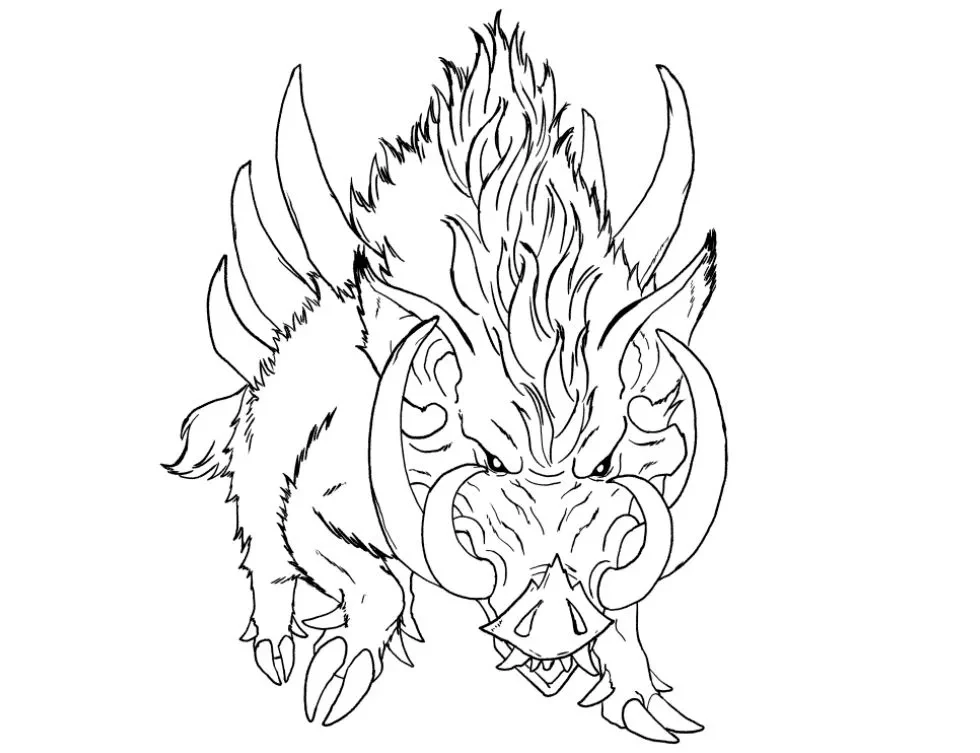
A mature Daenodur can stand nearly three metres at the shoulder, its great head carried low beneath a pronounced hump, with a dark mane of bristles running down its back and six bone spikes curving up from its flanks. Its tusks grow heavier with age, hooking prey into the path of a charge powerful enough to splinter young trees and overturn a wagon. It gives little ground, even to an opponent that ought to frighten it. Villagers who mistake that stubbornness for stupidity rarely get a second chance to judge it.

Hunters look for torn roots, deep hoof marks and the sour smell of buried meat before they look for the beast itself. Near its den, almost anything moving is either a rival or another meal. When its bristles stand on end and it starts tearing at the earth with its hooves, the old hands are already looking for something thick enough to stand behind. Yet hunters still risk their lives to bring one home. A single Daenodur can feed an entire village, its meat slow-roasted until tender or simmered into a rich stew prized enough to draw neighbours from every doorway. A successful hunt means a feast, though there is often an empty place at the table.

“We found his boot first, sticking out beneath the roots, and my brother went down on his knees to dig. I caught him by the collar when I saw the rest of that clearing. Every little mound had flies on it, and there was fresh earth turned over beside us. Enough for two more.”

The Identity

We began with the weight and stubborn bearing of a wild boar, then looked to the prehistoric Daeodon for a more imposing head and frame. The Daenodur needed to belong among Firya’s apex predators. A pronounced hunch, oversized tusks and six bone spikes gave the silhouette a brutality that an ordinary boar could not carry.
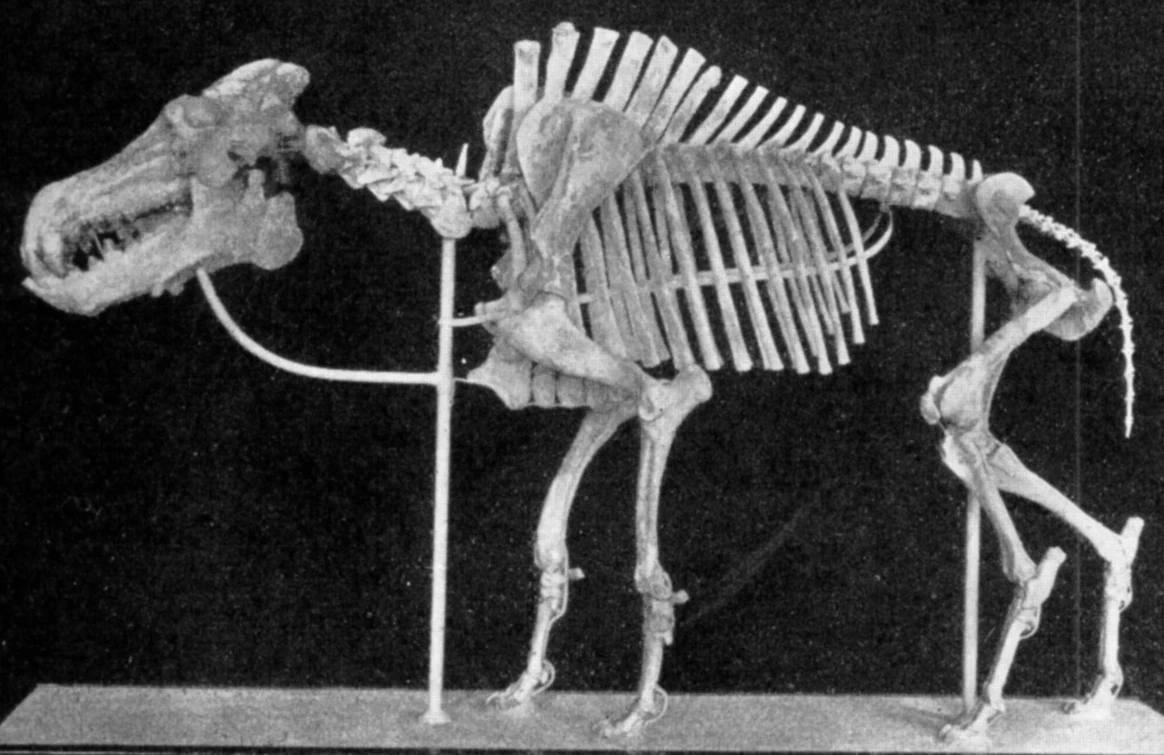
Daeodon skeleton showing the oversized skull and heavy forequarters used as design references
Daeodon, a reference for the head and frameHistorical illustration credited to Peteron, before 1923 · Wikimedia Commons (opens in a new tab) · Public domain in the United States. Resized and converted to WebP.
Daenodur design study. Concept and line art by Piter Johanes
Concept and line art by Piter Johanes

The Mood

The pose brings that weight straight towards the viewer. Piter kept the head low and the feet planted wide, making the creature feel ready to drive forward rather than simply stand for a field sketch. The design is compact and confrontational, with the tusks framing a face that gives no sign of backing down.

The Essence

This was a short design study, built around clear line art and simple shadows that would remain readable on textured paper. Piter Johanes developed the drawing and finished line work. Ronald Fersula added the earthy colour pass, separating pale bone from dark bristles without losing the strength of the lines.

Final Design
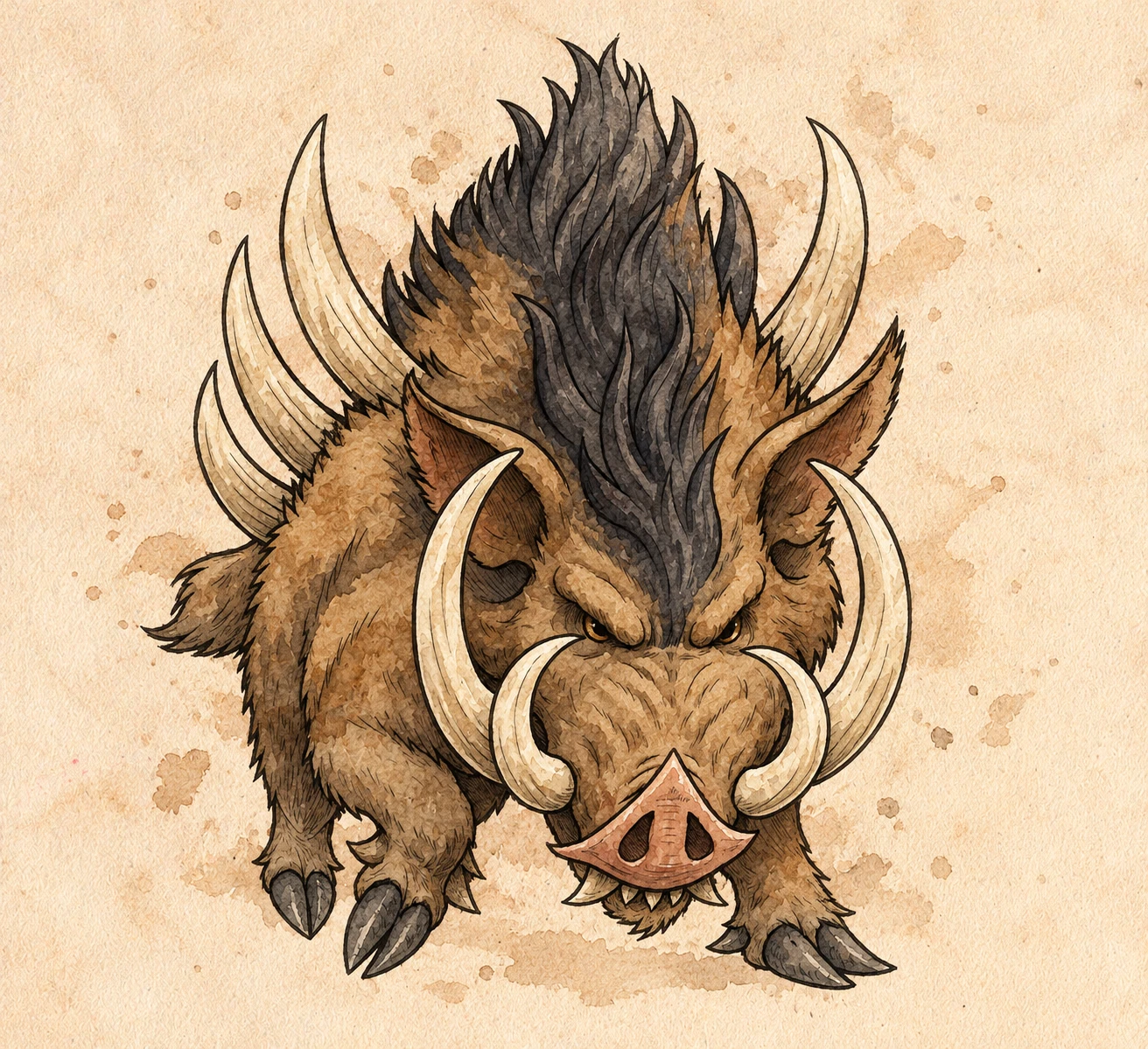
Daenodur finished colour design. Line art by Piter Johanes, colour by Ronald Fersula
Line art by Piter Johanes · Colour by Ronald Fersula

We hope you enjoyed this glimpse into one of the hungriest inhabitants of Firya’s forests.

The artists behind Daenodur

Explore related entries

Back to the Skyland Codex

100%